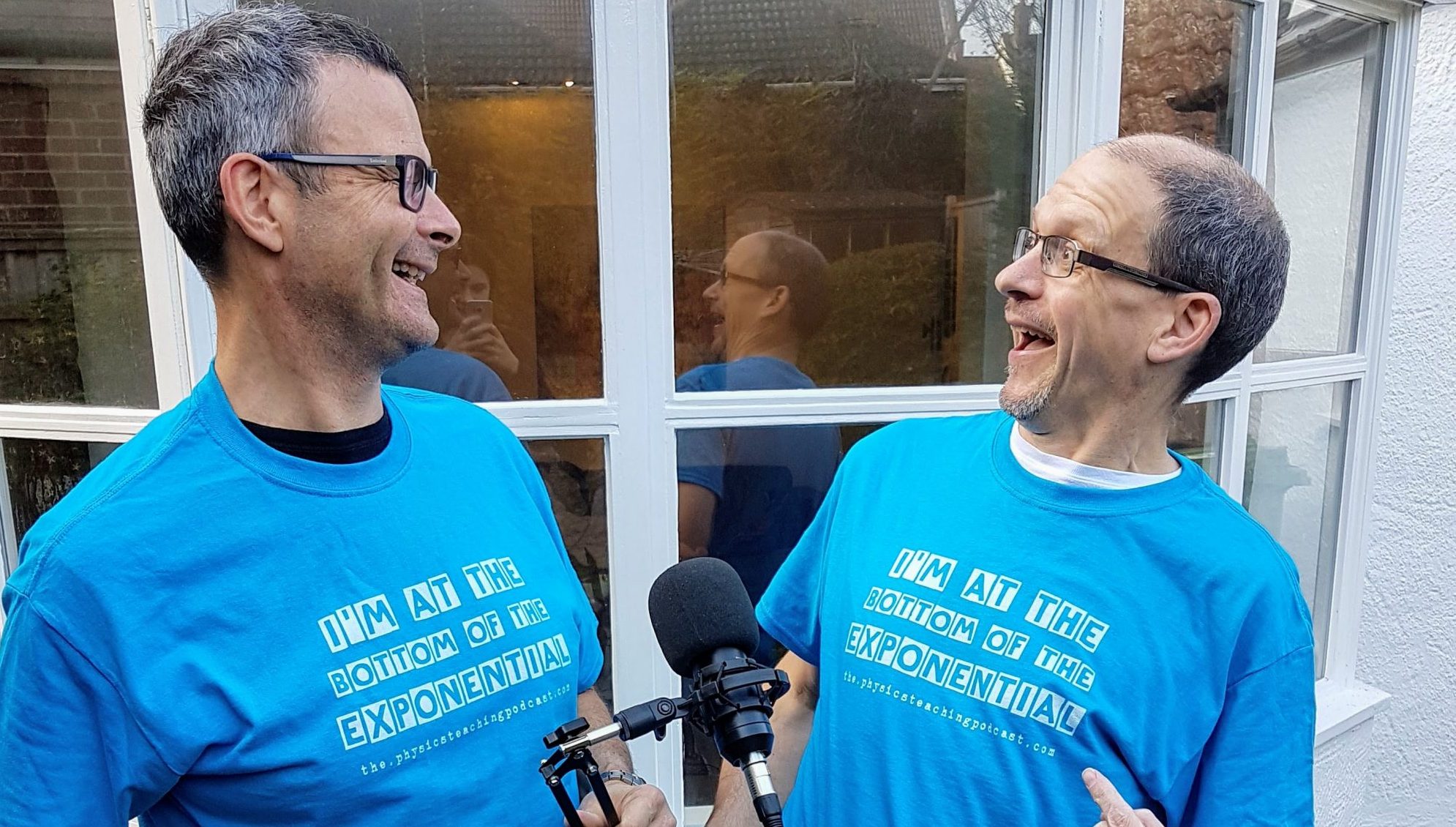
Category: Podcast

  • 13. Lasers, Labs and a Large(r) hadron collider

    13. Lasers, Labs and a Large(r) hadron collider

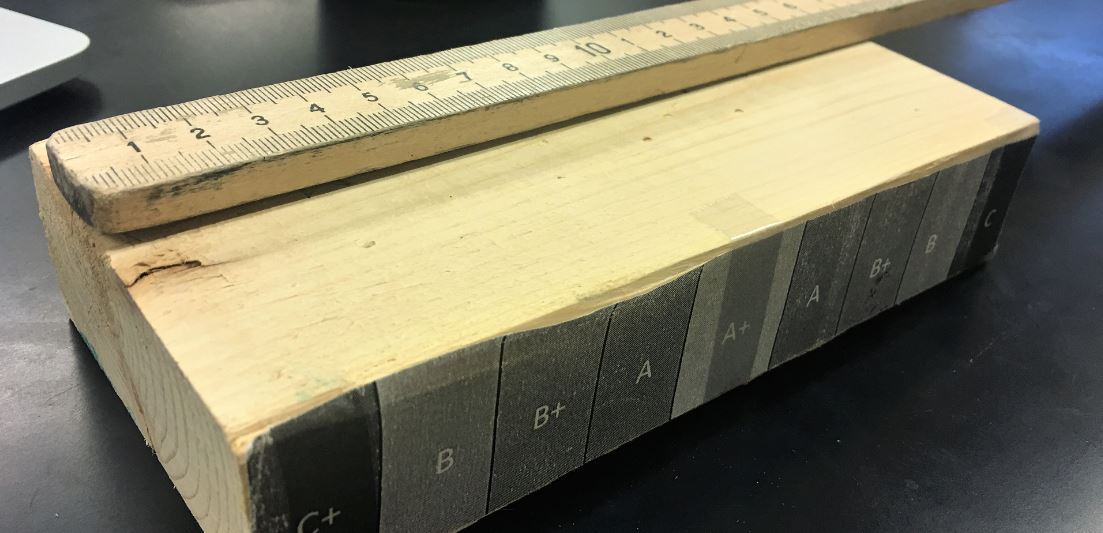
    Thomas and Robin had such fun talking to Patrick Kaplo (Episode 11) from Windham, New Hampshire that we talked to him again about his Challenge Labs. These are graded practicals where there is a one-shot event at the end of the practical that gives you your final grade. You can listen to how this works in an optics lab… err… practical in this episode or rewind to episode 11 for the sliced pendulum experiment.

    Time Stamps

    • CERN Plans @ 00:20
    • Thomas uses Podcast ideas in his lesson @ @ 2:57
    • Challenge Practicals @ 6:48
    • Formative Feedback @ 9:53
    • Refractive Index based Challenge Lab @ 11:15
    • Post interview chat 19:40

    Summary

    Size isn’t everything, but no-one told CERN: they’ve announced designs for the next generation collider. Thomas and Robin are looking forward to find out just a little bit more about the Big Bang and the nature of matter. Thomas celebrated an inaugural ‘podcast day’ when in the same day he used the electric motors, mystery tubes and Perimeter Institute resources ( ‘Bubble Chamber Detective’) from previous episodes.

    Friend of the Podcast Patrick Kaplow returns to be embarrassed by Robin’s hero-worship. Never has anyone been audibly grateful for thousands of miles of ocean. Patrick tells us about “Challenge Labs”, where there is a one shot answer that gives you your grade. He goes on to describe a simple refraction/reflection experiment to test students’ understanding where the grade is determined by a one shot attempt at predicting a laser beam’s path through a prism.

    A brief caution: don’t forget to check with CLEAPSS (or your local Health and Safety body) that any Laser pens or cheap lasers are safe to use.

    Join in!

    Please share ideas or successes – or indeed questions by messaging us on BlueSky: https://bsky.app/profile/physicstp.bsky.social .  You can also message us via our website contact form on every page of the web site at  the.physicsteachingpodcast.com, or email using the address given in the podcast (if we remember). We are moving away from X but can be found there as @physicstp.

    Music

    The music is used under the Attribution-NonCommercial 3.0 International License

  • 12. Shrink-Rays, Spectrum and String…

    12. Shrink-Rays, Spectrum and String…

    Thomas and Robin discuss why – when they are less likely than a podcast from the gym in January – media are still obsessed with Shrink Rays and mysterious (not Alien) Space signals. They soon move onto far more entertaining matters as they talk about teaching the EM Spectrum. Thomas tells us about his lovely “How long is a piece of String?” lesson. One of Robin’s favourites, it’s a great way of engaging reluctant students in the exploration of measurement, errors and uncertainty.

    Time STamps

    • (not) Shrink Ray @ 2:50
    • Signals from Deep Space @ 4:50
    • Electromagnetic Spectrum @ 6:37
    • How Long is a piece of string? @ 14:18

    Summary

    It’s not a Shrink Ray: this is published in Science Magazine, but theengineer.co.uk is a bit more accessible. Remember to tell us your examples of how putting “Laser” on the front of everything makes the students think anything is better. Whys is any signal from space immediately attributed to Aliens? The BBC should know better. Helen CK’s question on Facebook about how to teach the Electromagnetic Spectrum finally gets addressed. (Sorry for the delay, Helen!) Your ideas will be bigger and better than ours so please share. Equally, if there’s something you want to throw open to the community, just let us know (twitter, contact form, instagram). If you find your students reluctant to engage with uncertainty and measurement, then you will love Thomas’s “how long is a piece of string?” practical.

    The EM Spectrum

    Helen CK contacted us long ago asking for ways to teach the e-m spectrum. Thomas and Robin chatted about how they would teach it. Thomas from the future visits to remind them that the Electromagnetic Spectrum song by Emerson Foo and Wong Yann is not to be missed (below). N.B. Take care with this song because there are some spurious ones set up in YouTube to fool and embarrass unwary teachers. Thomas mentioned “any number of Doppler effect videos on YouTube”, this is a good one.

    Join in!

    Please share ideas or successes – or indeed questions by messaging us on BlueSky: https://bsky.app/profile/physicstp.bsky.social .  You can also message us via our website contact form on every page of the web site at  the.physicsteachingpodcast.com, or email using the address given in the podcast (if we remember). We are moving away from X but can be found there as @physicstp.

    Music

    The music is used under the Attribution-NonCommercial 3.0 International License

  • 11. Poppers, Pendulums and Pond-hopping

    11. Poppers, Pendulums and Pond-hopping

    The days are getting longer, and the monster Christmas term is behind us. Thomas and Robin refuse to let January blues dull the joy of physics teaching as they kick 2019 off with a cracker (pun intended). Two kinematic experiments are the focus, one using a pop-up toy and one that needs fire and blades.

    Thomas and Robin also mourn those long-forgotten pieces of equipment buried in obscurity at the back of the cupboard. Please don’t leave them there to fester. If you have a piece of equipment you are unsure about, why not send us a photo by email or post about it in the forum, and do head that way if you want to talk about the episode, or anything else in Physics Teaching. 

    Robin started the new year with a series of panic attacks after hearing about practicals that are both fun and difficult. The anxiety was only compounded by assertion that practicals can be graded, and don’t always evidence progress! He is currently recovering with the help of a Valium prescription and a copy of OFSTED’s annual report.

    How great was it to hear from New Hampshire this week? Thanks so much to Patrick Kaplo from Windham High School for telling us about physic teaching in New England and giving us a practical in memoriam. Patrick joins our growing list of podcast heroes, not least because of this quote from the New Hampshire State Education Dept: ” Mr. Kaplo drives engagement in his classes by asking his students to build six foot tall trebuchets, ride CO2[sic]-powered fire extinguisher rocket carts… fire vacuum-powered ping-pong balls over 400 MPH, and visualize wave phenomena in an 8-foot long fire tube…”. As they might say in the States, we are totally getting him back again!

    Robin has been trying to avoid cultural references that befuddle Thomas, but when he exclaimed “Jurassic Park!” he probably confused everyone. Anyway, this youtube video might help. For the record, Robin is much more like Alan Partridge than Thomas… in fact he’s more like Alan Partridge than Alan Partridge.

    Success!

    Join in!

    Please share ideas or successes – or indeed questions by messaging us on BlueSky: https://bsky.app/profile/physicstp.bsky.social .  You can also message us via our website contact form on every page of the web site at  the.physicsteachingpodcast.com, or email using the address given in the podcast (if we remember). We are moving away from X but can be found there as @physicstp.

    Music

    The music is used under the Attribution-NonCommercial 3.0 International License
  • 10. Ways to teach… Electricity

    10. Ways to teach… Electricity

    Merry Christmas Physics teachers!  In a bumper festive edition, Thomas and Robin have rounded up your ideas and tips on how to teach electricity.  It’s quite rare to reach a clear conclusion in a discussion of teaching, but there was consensus that if you are going to use a model, then the rope model is a great starting point, and Thomas has written a full description of a way to use the rope model in his blog.  We also acknowledged some other models and their usefulness: the important thing is to reflect and evaluate, but then again isn’t it always?

    Resources

    You can see all the tips and suggestions in a gallery at the bottom of the page.

    We were delighted that the excellent PhET resources were mentioned by a couple of people. There are several electricity simulations, for example the DC construction kit.

    Robin mentioned the Supporting Physics Teaching Web site, and its resources on electricity. It’s a great resource but is more akin to an Encyclopedia than a guide.   For a nice clear description of the rope model read the article by Tom Norris about teaching electricity. Tom also sent us a message after the interview:

    Traditionally, in ks3 electricity schemes, you teach the electricity concepts, and *then* comes a lesson where you teach about electricity models. I personally wouldn’t do the “evaluating models” lesson unless I’m happy students’ understanding of electricity itself is at an expert enough level to be able to spot the subtle nuances of what the models do well and not so well. And also, secondly, because I don’t think knowledge of electricity models is anywhere near important enough to give a whole lesson to. The most important resource physics teachers have is time, and I the electricity topic I want to spend every lesson teaching about electricity itself. I don’t see electricity models as ‘content for students to learn’, rather, electricity models are something that I, the teacher, turn to, to help me explain/demonstrate the electricity concepts that I’m teaching.

    Tom Norris

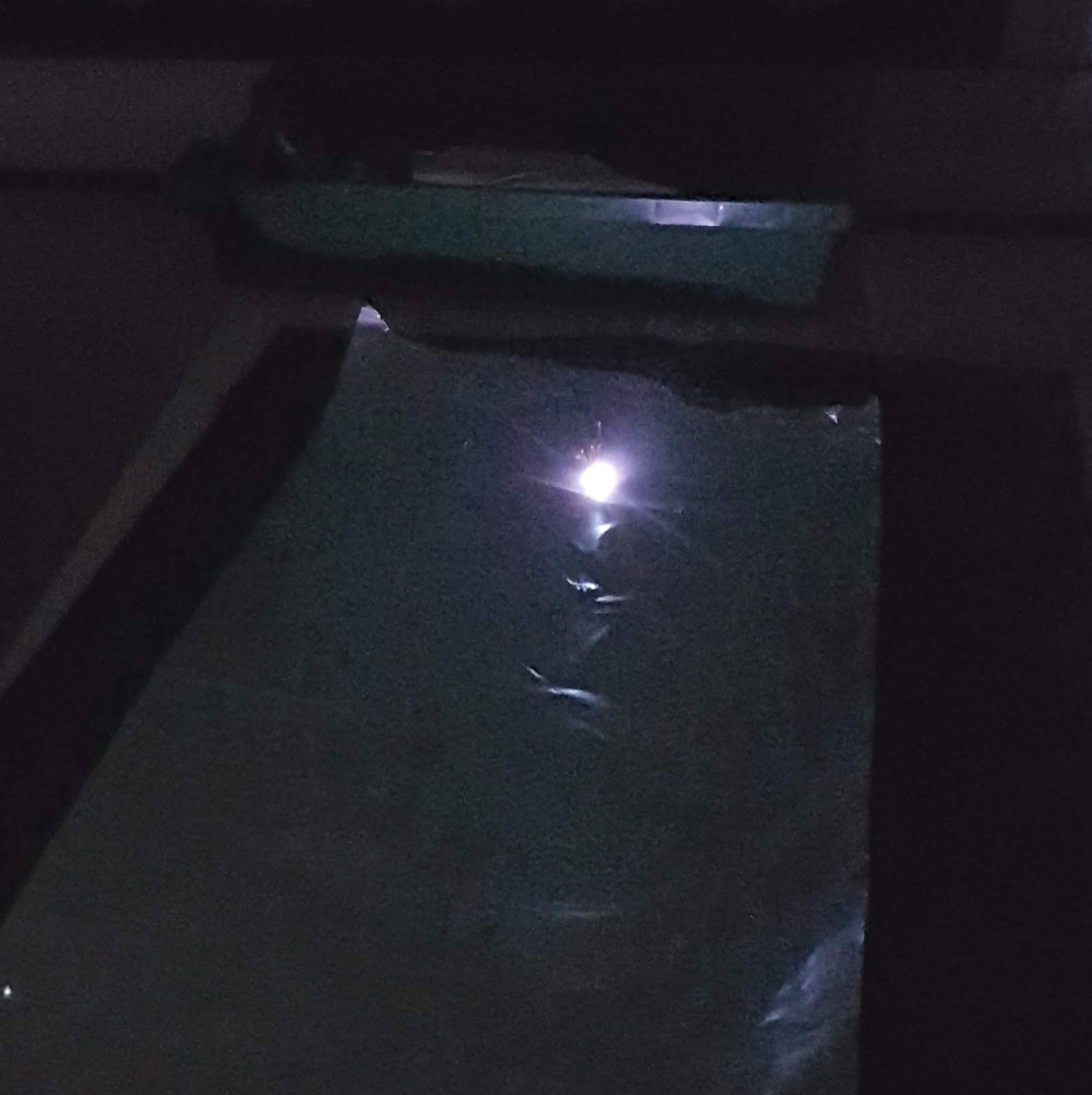
    Lucky shot of an arc sparking

    Thomas was delighted by the idea of driving a aluminium foil capacitor with the EHT. He duly did it and was delighted with the results.

    What an exceptional community we are building!  All of this week’s podcast came from our growing listenership, so a million thanks.  Keep spreading the word, and if you liked the slightly different format (or not!), do let us know.  Similarly, if there’s anything you’d like to cover, please do share.  We plan another special on energy soon.

    Have a good rest and we’ll see you in the New Year!

    Join in!

    Please share ideas or successes – or indeed questions by messaging us on BlueSky: https://bsky.app/profile/physicstp.bsky.social .  You can also message us via our website contact form on every page of the web site at  the.physicsteachingpodcast.com, or email using the address given in the podcast (if we remember). We are moving away from X but can be found there as @physicstp.

    Music

    The music is used under the Attribution-NonCommercial 3.0 International License

  • 9. Mentors, Motors and Merch

    9. Mentors, Motors and Merch

    Robin hadn’t heard about the recent Falcon landing failure so Thomas filled him in.  Cutting-edge space technology is still frontier science: we need your students to be the engineers of tomorrow!  Regular listeners will know how much Matt Groening influences the podcast, and just in time fro Christmas, we have launched our first ‘merch’, setting up a shop on the web site.  A shop where you can buy the T-Shirt? Yes, all your Christmas present problems are solved!  Listen out for a secret (??) code that allows you to get your shirt at cost. This time next year we may be stocking TPTP box sets and underpants: our ambition knows no limits.

    Care in the community…

    Physics teachers can be empathetic too! Robin worries about how hard this time of year can be, and especially for young-in-service teachers and the terrific Jo Kent draws on her wealth of experience to give her advice. She highlights how an empathetic ear can make all the difference, and on a more practical note, how networking can help to build communities.  She specifically mentions TalkPhysics and Thomas compares it to PTNC. (The IoP has a page where several other ways of networking are listed). Jo goes on to tell us about her Pint Pot Motors in a Practical In Memoriam. Below you can see the images she talks about below and she also sent us her PowerPoint and the video her father made.

    It remains a privilege and a joy making this podcast for you.  We love hearing from you and you are a very big part of the adventure; guide us, tell us what you want to hear about. It really is your podcast, so please get in touch: teachers of physics are our very favourite superheroes! 

    Jo’s Pictorial Instructions

    A Working Motor

    The Motor Jo’s Dad made:

    Also Thomas made the motor and shared it on Twitter:

    Join in!

    Please share ideas or successes – or indeed questions by messaging us on BlueSky: https://bsky.app/profile/physicstp.bsky.social .  You can also message us via our website contact form on every page of the web site at  the.physicsteachingpodcast.com, or email using the address given in the podcast (if we remember). We are moving away from X but can be found there as @physicstp.

    Music

    The music is used under the Attribution-NonCommercial 3.0 International License

  • 8. Venn Hats, Meows and a Mysterious Tube

    8. Venn Hats, Meows and a Mysterious Tube

    Mr Benjie

    As David Bowie once mused “Is there seismic activity on Mars?” ( I think that’s what he said…), and who are we to argue?  So we kicked off discussing NASA Mars Insight Lander and then Robin confessed to group about his tendency to get on a self-righteous soapbox (see episode 7!).  Luckily this week’s chat was the perfect antidote to stress as he chatted to Carole Kenrick: primary teacher, secondary teacher,  artist and PhD student, she wears many metaphorical hats … and has a podcasting cat called Mr Benjie.

    Carole tells us about two of the practicals she likes the most: decay-dice and mystery tubes. Decay dice take the simplicity of rolling one die, developing it in to a beautiful mathematical model. She uses mystery tubes from the Berkley Understanding Science web site and they kindly provide instructions to make them. Thomas couldn’t resist making a mystery tube of his own and “Thomas from the future” appears to tell how he got on.

    Thomas' early prototype
    Thomas’ early prototype

    Carole also introduces us to “Physics Fairy” (no, really, check it out!) and explained how it came into non-existence from working with Force Goggles from the Supporting Physics Teaching web site.

    New Competition – Closes 13th December

    Help us with our planned “Electricity” episode by giving us your top tips… and pitfalls. Either tweet us with the hash tag #physicstpelectricity or comment in the thread on our Facebook page. Thomas and Robin will choose a winner on the 13th of December and will send you a signed copy of Ben Rogers’ wonderful book The Big Ideas in Physics and How to Teach Them.

    It remains an enthralling and educational adventure making this podcast for you.  We love hearing from you and you are a very big part of the adventure; guide us, tell us what you want to hear about. It really is your podcast, so please get in touch: teachers of physics are our very favourite superheroes!

    Join in!

    Please share ideas or successes – or indeed questions by messaging us on BlueSky: https://bsky.app/profile/physicstp.bsky.social .  You can also message us via our website contact form on every page of the web site at  the.physicsteachingpodcast.com, or email using the address given in the podcast (if we remember). We are moving away from X but can be found there as @physicstp.

    Music

    The music is used under the Attribution-NonCommercial 3.0 International License

  • 7. Ben, Big Ideas and beginnings

    7. Ben, Big Ideas and beginnings

     Ben’s Book

    Thomas and Robin talk about the podcast’s roots and where it all started, to help all teachers of physics to feel a sense of professional community. You can help by sharing it with your friends, and if you do that you have a chance to win a podcast T-Shirt! The competition lasts until 30th November 2018 and the winner will be announced in the Episode 8.

    We were joined by author and all-round lovely man Ben Rogers, whose books The Big Ideas in Physics and How to Teach Them is taking the physics teaching community by storm.  Ben tells us about cognitive science (links below); why he is not opposed to practical work, and how he came up with all the history and characters in the book.

    Thomas enthuses about the versorium needle (everyone should make one). 

    Robin was on his soapbox again (it happens, just ignore him) encouraging teachers to avoid the temptation to treat new ideas as how they should be teaching, rather to use the ideas to enhance the good practice you’ve built up.

    Versorium (needle)

    Ben’s References for Cognitive Science

    …and finally

    Don’t forget to enter our first competition. Win a beautiful podcast T-shirt (in the colour of your choice) by interacting! To win, tell us why you like listening. There are many ways to do this:

    Thomas and Robin will pick a winner and announce it in Episode 8.

    It remains an engrossing and uplifting adventure making this podcast for you.  You’ve already taken it in directions we weren’t expecting; it really is your podcast, so please get in touch: teachers of physics are our very favourite breed of hero!

    Join in!

    Please share ideas or successes – or indeed questions by messaging us on BlueSky: https://bsky.app/profile/physicstp.bsky.social .  You can also message us via our website contact form on every page of the web site at  the.physicsteachingpodcast.com, or email using the address given in the podcast (if we remember). We are moving away from X but can be found there as @physicstp.

    Music

    The music is used under the Attribution-NonCommercial 3.0 International License

  • 6. What happens when your jelly won’t hold your weight?  Is it time to lose some mass?

    6. What happens when your jelly won’t hold your weight? Is it time to lose some mass?

    Jelly chair aftermath

    Thomas and Robin got together in the same room for a chat this week. Don’t worry, as a good physicist and a good engineer they avoided eye contact*. The big news last week was the redefinition of the kilogram which was originally based on the mass of Napoleon’s leg**, but latterly on a  lump of metal held in what looked suspiciously like a cake container. So we discussed misconceptions about mass and weight and about one of Thomas’ favourite experiments: the jelly chair.

    *Well, that’s an unhelpful stereotype!  In fact we were highly empathetic and talked about our feelings extensively.

    **completely made up

    Competition! 

    Now we have listeners, AND an Instagram page (@physics_teaching_podcast) we thought we would encourage you to share the podcast by having our first competition. Win a beautiful podcast T-shirt (in the colour of your choice) by interacting! To win, tell us why you like listening. There are many ways to do this:

    Thomas and Robin will pick a winner in a couple of weeks.

    It remains an enthralling and inspiring adventure making this podcast for you.  You’ve already taken it in directions we weren’t expecting; it really is your podcast, so please get in touch: teachers of physics are our very favourite breed of hero!

    Join in!

    Please share ideas or successes – or indeed questions by messaging us on BlueSky: https://bsky.app/profile/physicstp.bsky.social .  You can also message us via our website contact form on every page of the web site at  the.physicsteachingpodcast.com, or email using the address given in the podcast (if we remember). We are moving away from X but can be found there as @physicstp.

    Music

    The music is used under the Attribution-NonCommercial 3.0 International License

  • 5. Models, marbles and marvels…

    In a bumper 5th episode, we chat to Stuart Farmer, self-proclaimed “Listener Number 2” about a brilliant visualisation of uncertainty.  In keeping with parsimonious podcast principles, Stuart’s practical involves nothing more elaborate than a variety of marbles and some paper cups.  You’ll love it!

    Thanks to Stuart Farmer

    Stuart got in touch and told us about his favourite physics, and we would love to hear from you.  Please share ideas or successes on our Facebook Page – https://fb.me/physicstp .  You can also message us via our website https://the.physicsteachingpodcast.com, Twitter @physicstp, email using  the address given in the podcast (if we remember) or by leaving a voice memo using WhatsApp or Telegram to the phone number in our Twitter profile, +44 7898 814716 (don’t call the number, nobody will answer, just hold down the microphone icon and speak your message). Don’t forget to tell us your name because we may use your audio in a future episode.

    Once again, it has been joyous and enlightening making this podcast for you and we want you to be a part of it, so please get in touch: teachers of physics are our very favourite people in the World!

    Join in!

    Please share ideas or successes – or indeed questions by messaging us on BlueSky: https://bsky.app/profile/physicstp.bsky.social .  You can also message us via our website contact form on every page of the web site at  the.physicsteachingpodcast.com, or email using the address given in the podcast (if we remember). We are moving away from X but can be found there as @physicstp.

    Music

    The music is used under the Attribution-NonCommercial 3.0 International License

  • 4. Why Don’t More Girls Choose Physics?

    Thomas and Robin try to find A New Hope in Episode 4 by addressing the perennial problem of the small proportion of girls choosing A Level Physics. 

    In this Episode:

    • World Dark Matter Day, 31st October: How did you celebrate it?
    • The Perimeter Institute and their Free Resources.
    • Where are all the girls? Jessica Rowson, former IoP Gender Balance Guru explains why girls don’t choose physics (lack of good teachers of Physics, parental influence and societal pressures), and suggests three easy things to do to make Physics a more attractive option (teach in context, link physics to careers and provide displays that promote the idea of physics in a non-biased way).  
    • Unconscious Bias Tests: Harvard provides them as IAT (Implicit Association Test) in Project Implicit. Robin and Thomas took the Gender-Science one.

    Thank you again to Jessica for her time and wisdom, and we would love you to join in too.  Please share ideas or successes on our Facebook Page – https://fb.me/physicstp .  You can also message us via our website https://the.physicsteachingpodcast.com, Twitter @physicstp, email using  the address given in the podcast (if we remember) or by leaving a voice memo using WhatsApp or Telegram to the phone number in our Twitter profile (+44 7898 814716). (Don’t call the number, nobody will answer, just hold down the microphone icon and speak your message). Don’t forget to tell us your name because we may use your audio in a future episode.

    If you really want to help us grow, please rate and review us on iTunes, thanks!

    We have really enjoyed making this podcast for you and want to make you a part of it in future so please don’t be afraid of getting in touch: teachers of physics are our very favourite people in the World!

    Join in!

    Please share ideas or successes – or indeed questions by messaging us on BlueSky: https://bsky.app/profile/physicstp.bsky.social .  You can also message us via our website contact form on every page of the web site at  the.physicsteachingpodcast.com, or email using the address given in the podcast (if we remember). We are moving away from X but can be found there as @physicstp.

    Music

    The music is used under the Attribution-NonCommercial 3.0 International License