Thomas and Robin meet outside, at an appropriate social distance, to remember Tim Hardingham and introduce an interview with the PhET Head of Development Ariel Paul (@DrArielPaul). Surely all physics teachers have heard of this outstanding free source of simulations and demos provided by the University of Colorado Boulder.
Support PhET!
PhET was the brainchild of Nobel Prize-winning physicist Carl Wieman, and the 158 interactive SIMS are racing towards a billion downloads. Ariel tells us about the herculean efforts that go into developing new sims and keeping them up to date. It’s resource-intensive work and desperately needs your support. If you’ve used PhET sims, please do show them your appreciation.
You can donate directly or pay 89p for their official app for the HTML5 sims (and encourage all your students to buy it too).
John Travoltage
Brazil Nuts
Thanks to Sophie Constantine for this excellent video that explains why Brazil nuts are not especially radioactive.
Please share ideas or successes – or indeed questions by messaging us on BlueSky: https://bsky.app/profile/physicstp.bsky.social . You can also message us via our website contact form on every page of the web site at the.physicsteachingpodcast.com, or email using the address given in the podcast (if we remember). We are moving away from X but can be found there as @physicstp.
There will be no podcast today as a mark of respect for Robin’s and Thomas’ dear friend The Reverend Tim Hardingham who was tragically killed whilst riding his bike with his family on Sunday 25th October. Tim was a guest in episode 21 of our first season.
21. The Rev
Below are Thomas’s and Robin’s personal memories of Tim who was a friend and mentor to us both.
Thomas says:
Tim was unique. A one off. A gentle man. A gentleman. I’ll never forget meeting him for the first time. I’m tall but he towered over me in his leather jacket and dog collar. I looked up to him then and never really stopped. There was no part of physics teaching where he could not provide support based on experience. I used to ask him questions that had bothered me for years and he would sit with me and talk me through it with quiet amusement. Amusement at the beauty of physics, amusement at the joy of talking about it.
Tim was outwardly chaotic at times and could be infuriating to be partnered with. Whilst you knew his side would be taught magnificently (I say “taught” but Tim just seemed to effortlessly magic the knowledge in to the students’ heads), my cheeky head of Physics (Robin) would gleefully tell me that I was responsible for prising the coursework out of Tim’s “filing system”. Tim’s assertion that he never lost a piece of work in his holistic method of stacking papers was an example of his solid belief that God moved in mysterious ways.
Tim was such a giving person that for a caring man of deep religious conviction, becoming ordained was inevitable. I think it just allowed him to do even more good. He was a quiet example of his faith and never thrust it at you. He knew I was atheist and would always reassure me that his assemblies were not overtly Christian; his Infernal Consumption Engine assembly was a masterpiece that only he could deliver and keep 300 fourteen year olds in rapt attention.
He was a delightful one-off and it would tickle him that I feel blessed to have known him.
Robin says:
It might seem a contradiction, to be a practicing vicar and a physics teacher, but once you met Tim Hardingham, somehow the puzzle became clear. Tim was pin-sharp, but grounded; fascinated with the physical world, yet deeply concerned for everyone around him. Even those who met him briefly were struck by this extraordinary man whose twinkling eyes and ready smile belied an uncompromising educator and intellect. I first met Tim when I started as an ‘in-school’ trainee in 2008; he was a veteran, spoken about with awe by his science colleagues. We worked out that he qualified to teach the year after I was born (1970), and he had honed his skills over the 38 years since. Watching him teach I was in awe; would I ever be that skilful in the classroom? The answer 12 years on, a resounding “No!” Tim’s teaching style was out of vogue at the time. He believed that physics was best understood by encouraging analysis and thought, and he would challenge students and take them outside their comfort zone. His method was more probing questions and challenge than 6-page lesson plans and learning objectives, so Tim’s methods were often out of step with the prevailing educational trends. Where superficial judgements on his teaching infuriated me, Tim was gracious. Typically, he was more concerned that others, less secure in their practice, were being undermined by adherence to ill-conceived ideology and it saddened him. Tim always put others before himself, and the only times I ever saw him angry and upset were when colleagues were treated shoddily. Tim taught me valuable lessons by the score, but the ability to be gracious under fire whilst quietly following your convictions, is one of his skills that I will strive for and never come close to matching. Time spent with Tim was always a blessing. He was generous with that time, even though his schedule was frantic, and when Thomas and I collared him to take part in an early episode of the Podcast he was enthusiastic supportive and – of course – fascinating. If I started to document all that Tim taught me about physics, about teaching and dare I say, about integrity, this post would run to volumes, and he would be uncomfortable with that. So how to pay tribute to this wonderful man in a way that he would be happy with? I hope Tim would be happy that, when I have those days (you know those days) when it just seems… hard, my habit is still to ask, “What would Tim do?” When I think of how best to approach teaching a topic, I imagine Tim introducing it, and invariably inspiration follows. When I map the years ahead of me in my career and wonder how to balance the teaching I love with the increasing tangential demands, it will be Tim’s example that I follow. I cherish that in one of the last conversations I had with him, I was able to acknowledge this and tell him that I was learning to be “a bit more Tim”. I think we could all do with being “a bit more Tim”.
Robin and Thomas are joined by Rajani Nair (@NairPhysics) who answered a Twitter call about A-level required practicals and was whisked in front of a microphone to talk to us. If you fancy coming on to talk about an aspect of physics teaching, just drop us a line in the contact form below.
Rajani had some really interesting variations on the standard Specific Heat Capacity practical, many of which would be of interest at KS4 as well as A-level, so do have a listen. Rajani shared a wonderful memorable practical which involves throwing eggs to demonstrate that smaller forces acting over a longer time are less damaging – to eggs and people. Thomas remembers the trope about standing eggs on end – he couldn’t remember the exact myth but it turns out to be “on the equinox”.
“Dispatches with de Winter” is our new regular feature for the podcast, with PGCSE Tutor, teacher, researcher and birdsong enthusiast James de Winter recommending a gem from the field of physics education research. James is wise in the ways of teaching and research and knows there can often be a disconnect, so “Dispatches…” will aim to focus on practcial advice you can trial in your classroom. James starts us off with an absolute cracker of a read: 5 Easy Lessons by Randall D Knight.
This is our last episode before half term so THANK YOU for listening, contributing, but most of all for teaching this wonderful subject. Have a well-earned break and drop us a line to say hi if you get a moment. You could follow in Rajani’s footsteps and be next episode’s guest. Don’t worry, next to Thomas and Robin, you’ll come off like Einstein! Happy Half-term everybody!
Join in!
Please share ideas or successes – or indeed questions by messaging us on BlueSky: https://bsky.app/profile/physicstp.bsky.social . You can also message us via our website contact form on every page of the web site at the.physicsteachingpodcast.com, or email using the address given in the podcast (if we remember). We are moving away from X but can be found there as @physicstp.
Thomas and Robin mull over the recent Nobel Prize for Physics, then chat to Carole Kenrick about IoP Domains and zines.
The Nobel Prize is still the ultimate accolade and viewed with envy by the fields that don’t have a Nobel Prize (in your face, maths!). This week we start by congratulating the three winners of the 2020 physics prize: Roger Penrose, Reinhard Genzel, and Andrea Ghez.
We catch up with Carole Kenrick (sadly without Benji the cat – see episode 8 of season 1 – he was hungry and had to be banished). Carole tells us about IOP Domains – a distillation of CPD resources made by our great friends and former colleagues at IOP. Links are below, and well worth checking out if you are teaching some physics and would like a bit of focused, high-quality CPD presented by some of the best in the business, then check out domains from IOP!
Carole also introduced us to ‘Zines’ – short sharp publications that raise awareness of breadth and diversity in physics – sadly aspects of the subject that are often neglected! Carole tells us how we can turn this into a game format that can engage students and teachers and raise awareness by stealth.
We reflect on how we have changed practice for the better – even amongst all the disruption of Covid – thanks to your tips and generous sharing of practice so a warm and heartfelt thank you. If you do have anything that you think might benefit the physics teaching community, please don’t hesitate to get in touch.
Please share ideas or successes – or indeed questions by messaging us on BlueSky: https://bsky.app/profile/physicstp.bsky.social . You can also message us via our website contact form on every page of the web site at the.physicsteachingpodcast.com, or email using the address given in the podcast (if we remember). We are moving away from X but can be found there as @physicstp.
Robin and Thomas meet Elysia (@PhysicsMumma) who helps them talk through the dear listener’s ideas for teaching under the current social distancing guidelines. She then talks them through her box of physics and introduces Frank the Flamingo.
My 'box of physics' everyone laughs at me but that's part of the fun. Also made up electricity demo boxes for teachers doing that topic and hopefully I can make some up for the next topic too pic.twitter.com/XKUblUfgNK
Thank you so much for making such a great job of teaching with the Covid restrictions! Given the circumstances, schools have done an extraordinary job, and this episode shows how teachers will always find a silver lining. We get a raft of ideas from folk turning the situation to their advantage; for example using visualisers to zero in on the crucial points of practicals, using OneNote to ‘write’ equations for you… we could go on.
… and of course we are trying to fill the void with our excitement for physics! Lots of us jumping up and down and miming longitudinal waves. Future generations will have a precious clutch oif anecdotes about their “weird physics teacher”.
So put the earpods in and enjoy a whole stack of ideas for teaching in Covid and starting to build your “physics box”. What’s in yours??
Please share ideas or successes – or indeed questions by messaging us on BlueSky: https://bsky.app/profile/physicstp.bsky.social . You can also message us via our website contact form on every page of the web site at the.physicsteachingpodcast.com, or email using the address given in the podcast (if we remember). We are moving away from X but can be found there as @physicstp.
WARNING: the following content contains numerous cheap references to Paddington Bear – see links.
Matt Bowman
Way back at the beginning of series one we were thrilled to hear from an international school teacher named Matt who had just landed in Lima (presumably bearing a label saying “Please look after this physics teacher”). Fast forward two years and we have finally managed to organise a chat with the fabulous Matt Bowman.
Matt kindly shares his thoughts on working abroad, with numerous tips and inside observations. If you are thinking of a spell working overseas, Matt’s advice is absolutely essential so have a listen and be inspired! Links to the plum international physics teaching jobs from TES, below.
Thomas was about to fix Matt with a particularly hard star over his attitude to practical work, but Matt is very pro-experimental work, just purposeful experimental work. Matt challenges us to target our planning at what knowledge or skills we want our students to leave the lab with after each practical. Do we really need to practise graph-drawing this time; is the design of the results table core to the objectives of this particular investigation? It’s an interesting point of view and Matt makes a good case. Thomas and Matt are still friends, now that we have cleared up that Matt is actually a big fan of experimental work…
Matt’s Practical in Memoriam is measuring the speed of light with cheese (no, really)
Please share ideas or successes – or indeed questions by messaging us on BlueSky: https://bsky.app/profile/physicstp.bsky.social . You can also message us via our website contact form on every page of the web site at the.physicsteachingpodcast.com, or email using the address given in the podcast (if we remember). We are moving away from X but can be found there as @physicstp.
Season 3 continues to deliver physics royalty as James de Winter joins us. James is the physics tutor on the Cambridge PGCE course and has seen generations of physics teachers through their training. Having met a fair sample I can say that all of them hold James in the sort of reverence that Luke reserved for Obi Wan.
A talk with James is always an education and this episode is no exception. There’s lots to think about in terms of reflection on your lesson: James encourages us to stay as practical as feasibly possible during these strange times. Practical work has a far more tenuous grip in schools than it should, and there are a number of reasons for this, but the Covid crisis is yet another obstacle, so please please safeguard investigation in your classroom.
So you may think that you should always have a practical investigation for every lesson.. well, no. As James points out, we need to think about our rationale, and how to tackle the obstacles and what we want students to walk away with after their experimentation.
Robin rambles on a bit about the PhET simulation, and if that appeals, we’ve posted a link below.
James makes a good case for LEDs instead of bulbs for circuit investigations – they’re more reliable, they’re cheap, they’re directional and they are more consistent than incandescent bulbs. We’re interested in hearing how you get on!
We move on to a discussion of then classic core practical “Investigating how current varies with voltage across a component”. Thomas tells us to have a working version of then circuit for the students to look at, and James urges us to give this practical a firm context. If your students haven’t got a good appreciation of voltage and charge, they won’t squeeze the most out of this investigation. James’s advice: make sure you know the narrative that you want the kids to walk away with.
A discussion of the micro and macro worlds led to a word of caution from James: we need to recognise that our comfort moving between the large and the small scale is almost certainly NOT mirrored by the students and so we should identify that as a skill that we should explicitly teach.
Oh, and James’s practical in memoriam is measuring the resistance of an 8B pencil line.
Please share ideas or successes – or indeed questions by messaging us on BlueSky: https://bsky.app/profile/physicstp.bsky.social . You can also message us via our website contact form on every page of the web site at the.physicsteachingpodcast.com, or email using the address given in the podcast (if we remember). We are moving away from X but can be found there as @physicstp.
Robin and Thomas reflect on a first week back under the new Covid guidelines and find time to talk through a simple required practical – timing a trolley rolling down a ramp.
It’s a strange world at the moment as we eye winter warily and a second wave threatens. It is interesting to reflect that school openings have been one of the rare success stories of the pandemic. As usual, teachers and schools have taken on the impossible mission and delivered. We know it’s a stressful time, but we did want to urge you to take a moment to refelct on how much you have achieved: your students are back in school and learning again.
This week we discuss the early days of the pandemic and how you might think about using demos instead of class practicals, and that practical work can still go ahead with thought and care. We also are making this up on the hoof, so please do contact us using the form below to share your ideas and successes.
We will catch you next week, but meantime, stay healthy and be kind to yourself. It will take us time to get used to this new reality and we are not going to work miracles… well not at first anyway…
Join in!
Please share ideas or successes – or indeed questions by messaging us on BlueSky: https://bsky.app/profile/physicstp.bsky.social . You can also message us via our website contact form on every page of the web site at the.physicsteachingpodcast.com, or email using the address given in the podcast (if we remember). We are moving away from X but can be found there as @physicstp.
Thomas and Robin look forward to a new – albeit different – school year with some reflections on “the new normal” and an interview with physics-teaching Royalty.
Season 3 is here! And Thomas and Robin start by thanking you for all your feedback after last year. We got some good ideas for this year and we’re looking forward to more Ways to Teach, more on the Core Practicals and more of the guests you have told us you love!
This week we have a couple of zingers to kick off the season.
First up, Thomas’s ‘boss’ joins us (the inverted commas indicate that Thomas is a free spirit who answers to NO-ONE). Matt talks us through his departmental COVID response and pays tribute once more to the wonderfu folk at CLEAPSS who have our back once again (link below). We wish you well with this, and our first Ways to Teach will refelct on some of the early lessons learned. Drop us a line with any good ideas you have had or heard for how to work practical work around the restrictions – there’s a contact form below, or Tweet at us @physicstp
If you want to start Season 3 with a real bang, you need something a wee bit special, and we are delighted that Richard Brock (Yes, THE Richard Brock!!) agreed to come on and talk to us about physics stories. Richard in case you don’t know, has been educating physics teachers and looking at the power of narratives in hooking students (and others!) into physics. Richard has written a series of brilliantly entertaining stories about physics, and the good news is that they are all freely available from the fabulous IOP Spark site (see link below).
Having Richard on was a great way to start season 3, and with physics teachers around the world getting back to the classroom and seeing their students again, the world seems a little brighter. Have agreat year and we will see you next week.
Please share ideas or successes – or indeed questions by messaging us on BlueSky: https://bsky.app/profile/physicstp.bsky.social . You can also message us via our website contact form on every page of the web site at the.physicsteachingpodcast.com, or email using the address given in the podcast (if we remember). We are moving away from X but can be found there as @physicstp.
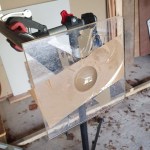
Thomas doesn’t know which week it is; thinking there is one more week of term he drags Robin to his garage to test some vacuum cannonupgrades. Thomas and Robin also look back through the podcast’s second season, and forward to a possible season 3.
A Tight Collar
Thomas has been experimenting with the collars that are used to join vacuum cannon spec pipes. After initial excitement (described in the podcast) Thomas does some further testing (described in an addendum) and finds that they don’t seal perfectly when pushed on dry and that the hole in the middle is slightly smaller than a table tenis ball (which probably doesn’t matter). The collars can be cut in to slices to make round flanges with three benefits:
Greater surface area for the tape to grip
The potential for “reloading” the tape off-line whilst another shot is prepared (one of the issues with the cannon is the pfaff of taping it up in the lesson
Easier reloading when you forget the ball!
The slices can also be used as a mechanical support for the “gold standard” flange – if you have managed to persuade tech. to make you them.
Thank you. It’s Been… Emotional
There are so many people to thank. We would not do this without *you* dear listener. The emails we get cheer us up and keep us going. We have had so many guests; thank you to you for giving up your time and being so flexible. (Special mention here to Miss Neutrino who happily rerecorded the podcast after Thomas didn’t press the right button). Thanks to Patrick Kaplo, who has become a good friend and who we were very disappointed not to meet face to face this Spring. Finally, thanks to our families, who think we are bonkers but wave us off to our respective cupboard and garage each week.
…but most of all, thank YOU for taking time to listen and – far more importantly – for teaching physics. We are privileged to teach the engineers, physicists, geologists … of the future, and it’s a future that is a lot brighter thanks to your hard work. Have a great summer!
Join in!
Please share ideas or successes – or indeed questions by messaging us on BlueSky: https://bsky.app/profile/physicstp.bsky.social . You can also message us via our website contact form on every page of the web site at the.physicsteachingpodcast.com, or email using the address given in the podcast (if we remember). We are moving away from X but can be found there as @physicstp.