Tag: models

  • Modelling Electricity with Ben Rogers

    Modelling Electricity with Ben Rogers

    With Thomas still away on his travels, Rosie and Robin take the opportunity to catch up on all that’s been happening. Robin spills the beans on some new tips and tricks he’s picked up at his new school. Think hands-on modelling for sixth form—it’s practical, fun, and downright genius!

    We’ve also got a special treat for you—a guest appearance from none other than Ben Rogers, a brilliant friend of the podcast! Ben dives into his fascinating research on introducing primary school children to models for electricity, a topic that’s notoriously tricky but oh-so-important

    Links:

    Ben Rogers New Book – Primary Science in a Nutshell

    Ben Rogers Book – The Big Ideas in Physics and How to teach them

    The rope loop model – GCSE physics online

    Sweets and cups model – Open University

    Energy Ball – For circuits using students

    PHET circuit builder

    Join in!

    Please share ideas or successes – or indeed questions by messaging us on BlueSky: https://bsky.app/profile/physicstp.bsky.social .  You can also message us via our website contact form on every page of the web site at  the.physicsteachingpodcast.com, or email using the address given in the podcast (if we remember). We are moving away from X but can be found there as @physicstp.

    Join in!

    Please share ideas or successes – or indeed questions by messaging us on BlueSky: https://bsky.app/profile/physicstp.bsky.social .  You can also message us via our website contact form on every page of the web site at  the.physicsteachingpodcast.com, or email using the address given in the podcast (if we remember). We are moving away from X but can be found there as @physicstp.

    Music

    The music is used under the Attribution-NonCommercial 3.0 International License
  • 10. Ways to teach… Electricity

    10. Ways to teach… Electricity

    Merry Christmas Physics teachers!  In a bumper festive edition, Thomas and Robin have rounded up your ideas and tips on how to teach electricity.  It’s quite rare to reach a clear conclusion in a discussion of teaching, but there was consensus that if you are going to use a model, then the rope model is a great starting point, and Thomas has written a full description of a way to use the rope model in his blog.  We also acknowledged some other models and their usefulness: the important thing is to reflect and evaluate, but then again isn’t it always?

    Resources

    You can see all the tips and suggestions in a gallery at the bottom of the page.

    We were delighted that the excellent PhET resources were mentioned by a couple of people. There are several electricity simulations, for example the DC construction kit.

    Robin mentioned the Supporting Physics Teaching Web site, and its resources on electricity. It’s a great resource but is more akin to an Encyclopedia than a guide.   For a nice clear description of the rope model read the article by Tom Norris about teaching electricity. Tom also sent us a message after the interview:

    Traditionally, in ks3 electricity schemes, you teach the electricity concepts, and *then* comes a lesson where you teach about electricity models. I personally wouldn’t do the “evaluating models” lesson unless I’m happy students’ understanding of electricity itself is at an expert enough level to be able to spot the subtle nuances of what the models do well and not so well. And also, secondly, because I don’t think knowledge of electricity models is anywhere near important enough to give a whole lesson to. The most important resource physics teachers have is time, and I the electricity topic I want to spend every lesson teaching about electricity itself. I don’t see electricity models as ‘content for students to learn’, rather, electricity models are something that I, the teacher, turn to, to help me explain/demonstrate the electricity concepts that I’m teaching.

    Tom Norris

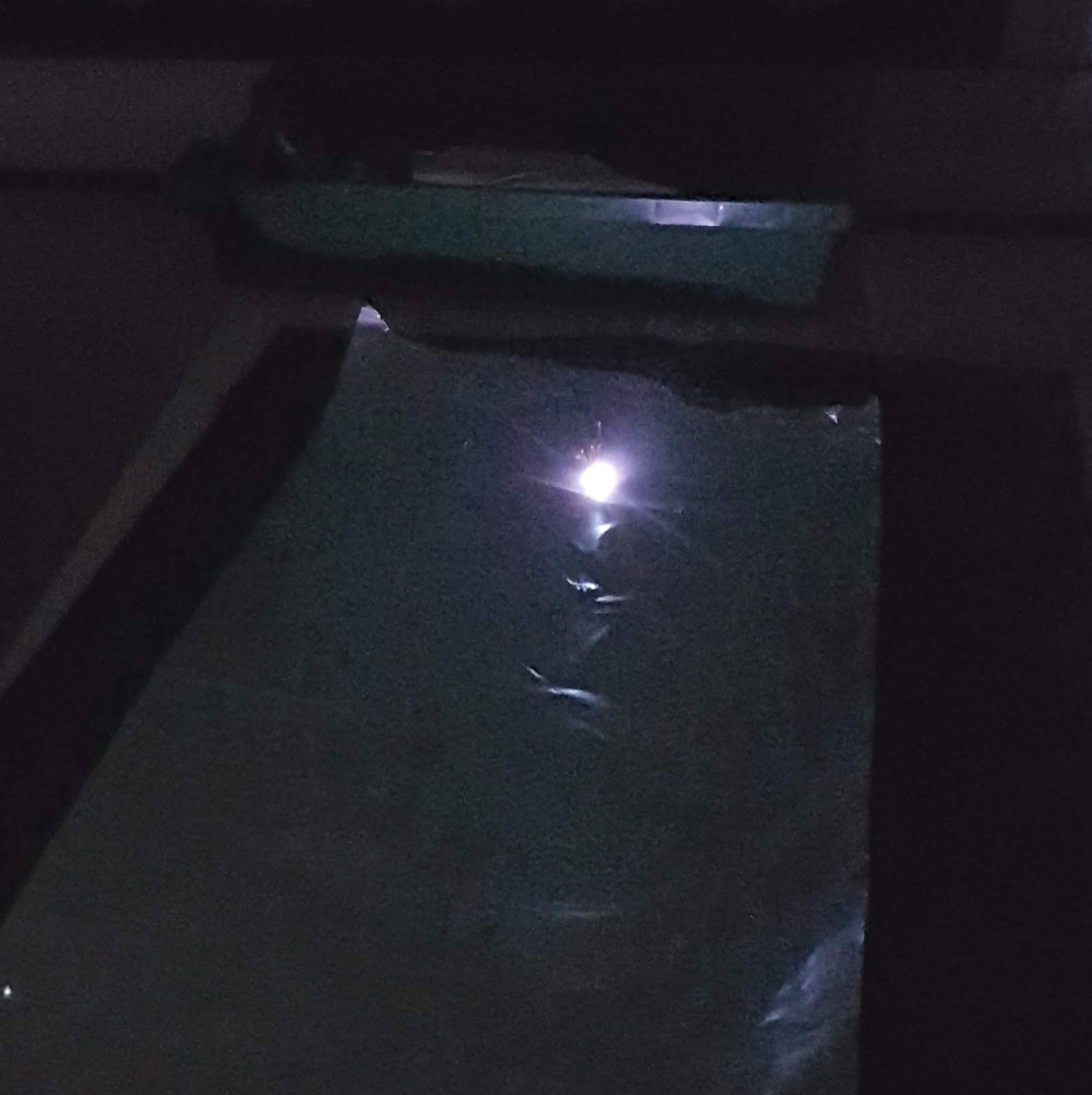
    Lucky shot of an arc sparking

    Thomas was delighted by the idea of driving a aluminium foil capacitor with the EHT. He duly did it and was delighted with the results.

    What an exceptional community we are building!  All of this week’s podcast came from our growing listenership, so a million thanks.  Keep spreading the word, and if you liked the slightly different format (or not!), do let us know.  Similarly, if there’s anything you’d like to cover, please do share.  We plan another special on energy soon.

    Have a good rest and we’ll see you in the New Year!

    Join in!

    Please share ideas or successes – or indeed questions by messaging us on BlueSky: https://bsky.app/profile/physicstp.bsky.social .  You can also message us via our website contact form on every page of the web site at  the.physicsteachingpodcast.com, or email using the address given in the podcast (if we remember). We are moving away from X but can be found there as @physicstp.

    Music

    The music is used under the Attribution-NonCommercial 3.0 International License